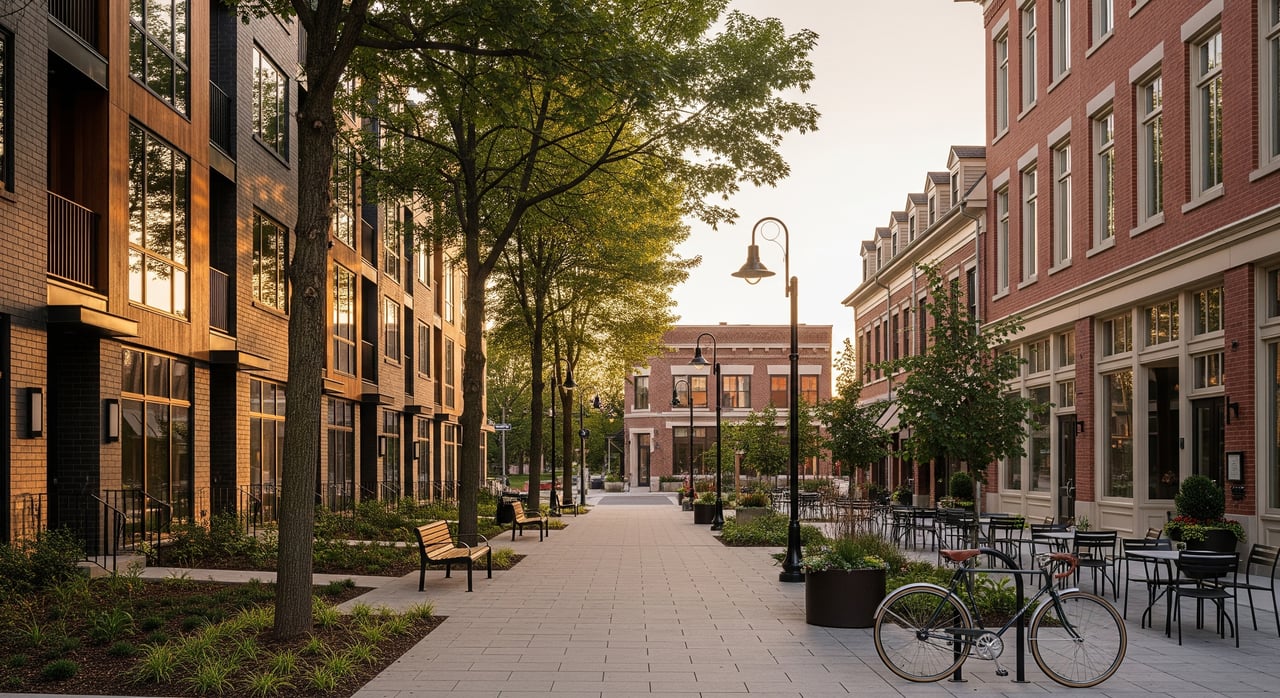
Imagine starting your morning with a five-minute walk for coffee, grabbing groceries on the way home, and hopping on a bus or trail when you want to explore. If that sounds like your kind of day, walkability should be a top filter in your Hopkins home search. You want a neighborhood that fits your routine, budget, and lifestyle, not just a house. In this guide, you’ll learn how walkability, trails, and transit shape home options, HOA expectations, and day-to-day life in Hopkins. Let’s dive in.
What walkability means in Hopkins
Walkability in Hopkins centers on Downtown Mainstreet, the city’s historic commercial corridor with restaurants, local shops, civic spaces, and community events. Living near this corridor can turn many daily errands into short walks and create a strong sense of place. The city’s official pages are a great resource to track downtown programs and planning through the City of Hopkins.
Hopkins also sits in a regional web of trails that link to nearby suburbs and parks. These paths support recreation and non-motorized commuting, and they connect you to retail and transit without getting in a car. To explore trail options and future links, check the Three Rivers Park District for regional trail maps and updates.
Transit adds another layer. Hopkins has Metro Transit bus service today, and the planned METRO Green Line Extension is designed to extend light rail from Minneapolis to the west metro with service through communities along the corridor. Timeline and station details evolve, so verify the latest with the Metropolitan Council’s Green Line Extension project page and Metro Transit for current routes and schedules.
The result is a clear pattern. You will find higher-density, walkable blocks around Mainstreet and near transit-serving streets, and more car-dependent neighborhoods as you move out from the center. That gradient influences what you can buy and how you will live day to day.
How walkability shapes your housing choices
Walkable areas often draw strong lifestyle demand. National research shows buyers value being able to walk to daily needs and transit, which can correlate with faster sales and price premiums in many markets. For context on buyer preferences nationally, review the National Association of Realtors’ research and statistics. For Hopkins-specific numbers, you will want local MLS and assessor data before making a decision.
Housing types differ by location. Near Mainstreet and on transit corridors, you will see more condos, townhomes, and mixed-use buildings, plus some older small-lot homes that may have been converted to multi-unit options. These choices typically come with shared amenities and lower-maintenance living. In outlying neighborhoods, single-family homes with larger lots are more common, which usually means more driving and more personal responsibility for maintenance.
Your total monthly costs can shift with walkability. Living in a smaller unit near daily needs and transit can lower transportation expenses, which helps some buyers balance HOA fees or slightly higher price points for convenience. To understand the housing-plus-transportation tradeoff, the Center for Neighborhood Technology’s H+T Index is a helpful framework.
HOA costs and what to expect
Many walkable product types, such as condos and townhomes, have homeowners associations. HOAs typically cover building maintenance, common areas, snow removal, trash, insurance for shared structures, and sometimes utilities or amenities. Fees vary by building age, size, amenities, and reserve funding health.
When you shop near Mainstreet or in new mixed-use buildings, expect HOAs to be more common than in outlying single-family areas. Build HOA dues into your monthly budget early and clarify what services they cover. For a complete picture of ownership costs, review property taxes and records through Hennepin County, and compare condo insurance needs to single-family policies with your agent and insurer.
Day-to-day tradeoffs to consider
Amenities and convenience
- Look for a 5 to 15 minute walk to your daily needs. Grocer, pharmacy, gym, coffee, parks, and community centers should sit at the top of your personal map.
- Downtown vibrancy is a feature for many buyers. Events and seasonal activities add energy and convenience.
- If you prefer quiet evenings, consider streets just off the core that still keep you within easy walking distance of Mainstreet.
Commute and transit use
- Check today’s bus routes to your workplace and typical destinations, including frequency and service hours through Metro Transit.
- Keep an eye on the Green Line Extension. New rail service can reduce driving for regional commutes over time, but construction and parking patterns can shift during rollout. Verify updates on the Green Line Extension project page.
Parking and vehicular access
- Downtown or near-transit properties may have assigned or limited parking. Ask about permit zones and visitor parking if you have multiple vehicles.
- If you plan to live car-light or car-free, clarify how easily you can reach transit, trails, and rideshare pickup spots.
Noise, activity, and livability
- Downtown energy can come with nighttime noise. Visit at different times to gauge your comfort level with foot traffic and weekend activity.
- If you are sensitive to noise, look for units facing courtyards or side streets rather than busy corridors.
Winter reality and pedestrian comfort
- In Minnesota, sidewalks, crosswalks, and winter maintenance matter. Ask how snow removal is handled for sidewalks, alleys, and private drives, and note the city’s winter policies.
- Check for well-lit, well-marked crossings and safe walking routes to transit, parks, and schools.
Schools and family needs
- For many family buyers, walkability also means safe routes to schools and nearby parks. Confirm school district boundaries and route safety without making assumptions about quality or preferences.
Accessibility and comfort
- Evaluate curb cuts, sidewalk conditions, and traffic speeds on your daily routes.
- If elevators or step-free entries are essential, prioritize newer or updated buildings and verify accessibility features during showings.
Smart search tips for walkability
Use targeted filters and on-the-ground checks to keep your search efficient.
- Map filters: Start with homes within a quarter to a half mile of Mainstreet to keep most daily needs walkable.
- Transit filter: Flag listings near current bus lines and planned rail service. Confirm details with Metro Transit and the Green Line Extension pages.
- Property type: Add condos and townhomes for lower-maintenance, walkable options; include single-family homes near downtown if you want a yard without giving up convenience.
- Parking needs: Sort for assigned or garage parking if you have multiple cars. If you want a car-light lifestyle, note homes with strong transit and trail access.
- Trails: Search for proximity to regional trails and parks using the Three Rivers Park District maps, then confirm distance on foot.
- Data cross-checks: Use Walk Score for a quick baseline, then validate by timing your own walks.
Questions to ask listing agents or HOAs:
- How much are monthly HOA fees, and what do they cover specifically?
- Is parking assigned, and what are guest and overflow rules?
- How is snow removal handled for sidewalks and private drives?
- What nearby development or infrastructure projects are planned, including any transit stations or commercial projects?
- For condos: What is the reserve fund status, and have there been recent special assessments?
On-the-ground visit tips:
- Visit at multiple times: weekday morning commute, lunchtime, evening, and weekend.
- Walk the routes you would use daily to groceries, coffee, transit, school, and parks.
- Time your walks to confirm realistic 5 to 15 minute distances.
- Check bus frequency and service hours on Metro Transit, and compare to your work hours.
Walkability checklist
Use this quick list to evaluate each property’s day-to-day convenience:
- Daily needs within a 5 to 15 minute walk: grocer, pharmacy, coffee, bank, park
- Trail access for recreation or commuting
- Current bus stop within a short walk, and future rail access under review
- Sidewalk condition, lighting, and safe crossings on your daily routes
- Winter maintenance plan for sidewalks and private drives
- Parking: assigned spaces, guest policy, and street parking rules
- HOA dues, covered services, and reserves if applicable
- Noise level at night and on weekends
- School routes and nearby family amenities if relevant
- Accessibility needs such as elevators or step-free entries
Case example: downtown condo vs. suburban single-family in Hopkins
A typical downtown condo near Mainstreet
- Lifestyle: Step out to restaurants, coffee, and services in a few minutes. Many errands are walkable, and bus access is nearby.
- Costs: Monthly HOA dues cover exterior maintenance, snow removal, and shared systems. Transportation costs may be lower if you drive less.
- Tradeoffs: Parking can be assigned or limited, and weekend activity may add noise. Unit size might be smaller than a single-family option.
A typical single-family home farther from Mainstreet
- Lifestyle: More space and a private yard, typically quieter streets and more personal control over your property.
- Costs: No HOA for many homes, but you assume exterior maintenance and full snow removal. Transportation costs may be higher if you drive more.
- Tradeoffs: Errands and coffee runs may require a car. Transit can be less convenient depending on route coverage.
Neither is right or wrong. Your best fit depends on how you value immediate convenience, maintenance responsibilities, parking, and quiet.
Where to verify details and stay current
- City programs and downtown events: Visit the City of Hopkins for Mainstreet updates, planning, and public works notices.
- Transit and the Green Line Extension: Check the Green Line Extension project page and Metro Transit for timelines, station planning, bus maps, and service hours.
- Trails and parks: Explore regional routes and future connections with the Three Rivers Park District.
- Market and ownership costs: Review NAR’s research and statistics for national demand patterns, the CNT H+T Index for cost tradeoffs, and Hennepin County for property tax and record lookups.
- Walkability baselines: Use Walk Score to compare neighborhoods, then verify on foot.
If you want a personalized plan, local showings, and clear next steps, reach out. With a boutique, high-touch approach, professional presentation, and neighborhood guidance, Karin Rice Duncanson is ready to help you weigh your options and find the right fit in the Twin Cities.
FAQs
What does “walkability” mean for a Hopkins home search?
- It means you can reach daily needs like groceries, coffee, parks, and transit within a comfortable 5 to 15 minute walk, especially around Downtown Mainstreet and nearby corridors.
How could the Green Line Extension change my housing decision in Hopkins?
- New rail service typically adds long-term convenience and can influence demand near stations, but timelines and station plans change, so verify updates on the Green Line Extension project page before making decisions.
What HOA questions should I ask when buying a condo near Mainstreet?
- Confirm monthly dues, what they cover, reserve fund status, special assessments, parking rules, and how snow removal and maintenance are handled.
How do trails affect home appeal in Hopkins?
- Trail access supports recreation and car-light commuting, which many buyers value. Check the Three Rivers Park District for routes, then time your walk from the property to the nearest trailhead.
How can I estimate total housing plus transportation costs for Hopkins homes?
- Use the CNT H+T Index to frame how location influences transportation spending, then layer in local HOA dues, taxes, and insurance for a complete picture.